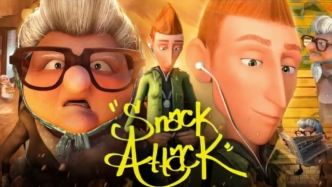
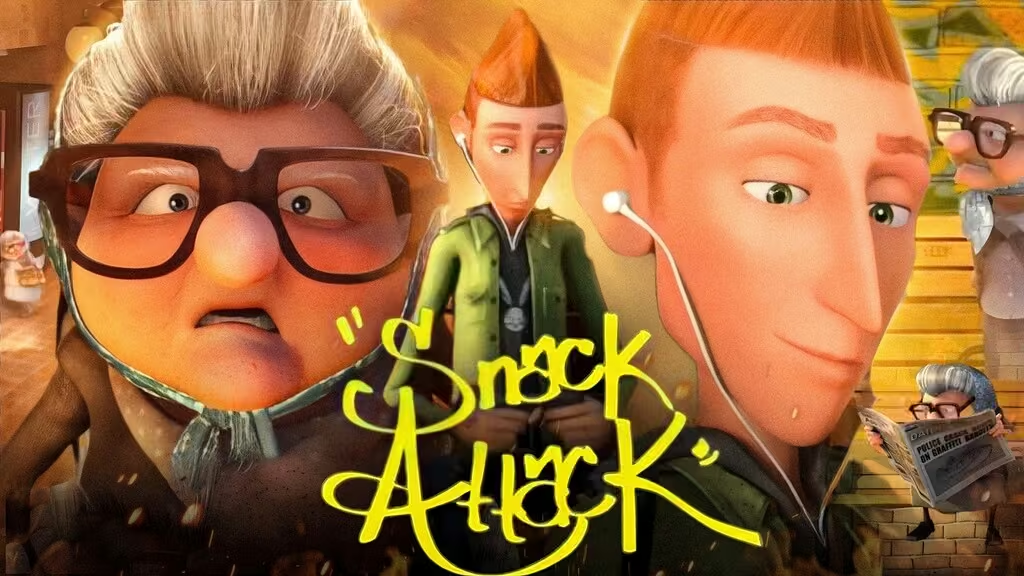

Snack Attack Short Film (2012) is Andrew Cadelago’s wordless 5-minute animated shorts about an old woman, a stolen cookie and a twist. Meaning, awards, themes and where to watch free.
Snack Attack Short Film (2012): The Wordless Animated Short About a Cookie Thief and a Lesson in Assumptions
An old woman buys cookies at a train station and sits down to eat them, and a teenager next to her starts eating them too. That is the setup of Snack Attack, a five-minute CGI animated short with no dialogue. It has since become a classroom favorite and one of the most-watched animated shorts on YouTube, because its final minute changes how you read the whole film.
Which “Snack Attack”? Several videos use this title, so for clarity this guide covers the 2012 animated short directed by Andrew Cadelago, the best-known one.
Quick Facts
| Detail | Info |
|---|---|
| Title | Snack Attack |
| Director / Writer | Andrew Cadelago (directorial debut) |
| Producers | Alejandro Gómez Monteverde and Leo Severino |
| Production companies | Arc Productions and Metanoia Films |
| Music | Roberto Murguía |
| Listed cast | Montserrat Espadalé |
| Format | CGI animation, no spoken dialogue |
| Runtime | About 5 minutes |
| Country | United States–Canada co-production |
| Genre | Animation, comedy, family |
| Premiere | September 6, 2012 (per Letterboxd) |
| Best-known awards | Grand Prize for Short Film and Audience Award (Ages 5–10) at the 2013 New York International Children’s Film Festival |
| Ratings | IMDb 7.0/10 in one snapshot; Letterboxd 3.17/5; FilmAffinity 6.3/10 from 245 votes |
Watch the Trailer
There is no separate trailer, because the film is only five minutes long. Most people go straight to the full film on YouTube. Its trailer-sized hook is its logline, “These cookies are mine!”
Watch the Shorts
The film is free on YouTube, where it has been posted since 2016. One education blog reported it had been viewed over 36 million times at the time it was written, and the number has likely grown since. Many teachers also recommend pausing it partway, at about the 3-minute-15-second mark, to ask students what they think is happening, then watching to the end.
Synopsis
Spoiler-free.
Waiting to board the train, an old lady just wants to eat her cookies in peace, but hijinks ensue when a teenager on the platform next to her seems intent on sharing them, too. The old woman first has a fight with a stubborn vending machine. A user review sums up the early scene: the snack doesn’t fall easily, so she tries body blows and kicks.
Once she has her cookies, she sits on a bench, and the young man beside her, who is wearing headphones, begins eating them. The standoff escalates. A summary of the film says it ends with a clever twist that completely changes the viewer’s understanding of what happened. That twist is the reason people recommend it, so go in blind if you can.
Creative Team
- Andrew Cadelago (writer, director): Snack Attack was his directorial debut, according to Zip Movie Hub, and took nine months of work spread across two years. An essay on the film describes him as coming from Pixar.
- Producers: Alejandro Gómez Monteverde and Leo Severino.
- Metanoia Films: The company is associated with actor Eduardo Verástegui. Some blogs credit him as the film’s creator, but official film databases and the festival page credit Cadelago as director, with Verástegui’s company producing it.
- Arc Productions: Formerly Starz Animation in Toronto.
- Roberto Murguía (music).
Festival Journey & Recognition
The verified record is concise:
- New York International Children’s Film Festival, 2013: The festival’s own page lists Snack Attack as a New York Premiere and as winner of the Audience Award, ages 5–10, and Grand Prize, Short. IMDb lists the same two wins.
- Wider claims: Some wiki-style sites list additional festival screenings, but I could not verify them from reliable sources, so I left them out. Check each festival’s official site before listing more awards.
It is notable that a children’s festival honored it, because the film also works as a conversation-starter for adults.
The Origin Story
The story comes from folklore. Aleteia describes it as based on an urban legend said to have originated in Europe, and a review of the film pairs it with the same theme of jumping to conclusions. One teaching site notes the story also aligns with Valerie Cox’s poem The Cookie Thief, which tells a similar tale of a stranger sharing a snack.
The film turns that anecdote into a wordless five-minute comedy. Producers Metanoia Films, known for faith-influenced projects, teamed up with a Toronto animation studio to make it.
Visual Style
The film is CGI animation with exaggerated, expressive characters. Because there is no dialogue, performance carries everything. A student essay on the film notes the story comes through gestures, body movements, squealing, moaning and other noises, and an IMDb reviewer says each movement is clear without words. Another reviewer pointed to high-angle shots of the old woman that make her look powerful and heroic, and praised how music shifts with the scene transitions. The physical comedy of the vending-machine fight sets up the old woman’s temper, which is why the later twist lands.
Key Themes
- Assumptions and first impressions. One review of the film says it shows how quickly we judge when we see only one perspective.
- Stereotypes of age and youth. The “grumpy old woman” and the “rude teenager with headphones” are both stock characters the film deliberately plays with.
- Perspective. The film is often used to teach point of view, since viewers form an opinion from what they are shown.
- Sharing and generosity. The film’s resolution turns on a small act of kindness.
- Humor as a teaching tool. Because it is funny first, the lesson goes down easily.
Critical Reception
Reception is warm and mostly from audiences and educators. IMDb reviewers call it funny, cute and easy to understand, and one said it is bittersweet and worth the five minutes. A Catholic news site praised it as “deserving of all of its accolades,” and an animation blog said it left them pondering more than many feature films. The numeric scores are moderate, ranging from about 6.3 to 7 out of 10 depending on the site, which is typical for a short with a broad family audience.
A large body of teaching material exists around it, including lesson plans on bias, stereotypes, author’s purpose and cause and effect, for English, speech therapy and Spanish classes. That educational life is a big part of its legacy.
Where to Watch
- YouTube: The most common place to watch it, free.
- Festival page: The New York International Children’s Film Festival lists the film.
- Databases: IMDb, Letterboxd and FilmAffinity list the credits and ratings.
Several channels have reuploaded it, so look for the official version from the producers when you link to it.
Director’s Journey
Andrew Cadelago made Snack Attack as his directorial debut after working in animation. One source describes him as coming from Pixar, though I could not confirm his full career history from the sources I found. The film’s success, with festival honors and years of classroom use, makes it his best-known work.
FAQ
- Who directed Snack Attack? Andrew Cadelago.
- Is there dialogue? No. It is entirely wordless.
- How long is it? About five minutes.
- Is it based on a true story? It is based on an urban legend said to have originated in Europe.
- What awards did it win? The Grand Prize for Short Film and the Audience Award (Ages 5–10) at the 2013 New York International Children’s Film Festival.
- Why is it used in schools? Its twist ending is an easy way to teach assumptions, stereotypes and perspective.